Shop
Shop Configurator
Agriculture/crop production
Truebner sensors
Together with the sensors from Truebner, we offer you the best solution for dynamic and water-saving irrigation with OpenSprinkler. Not only large-scale irrigation of arable land is made possible, but also special solutions such as:
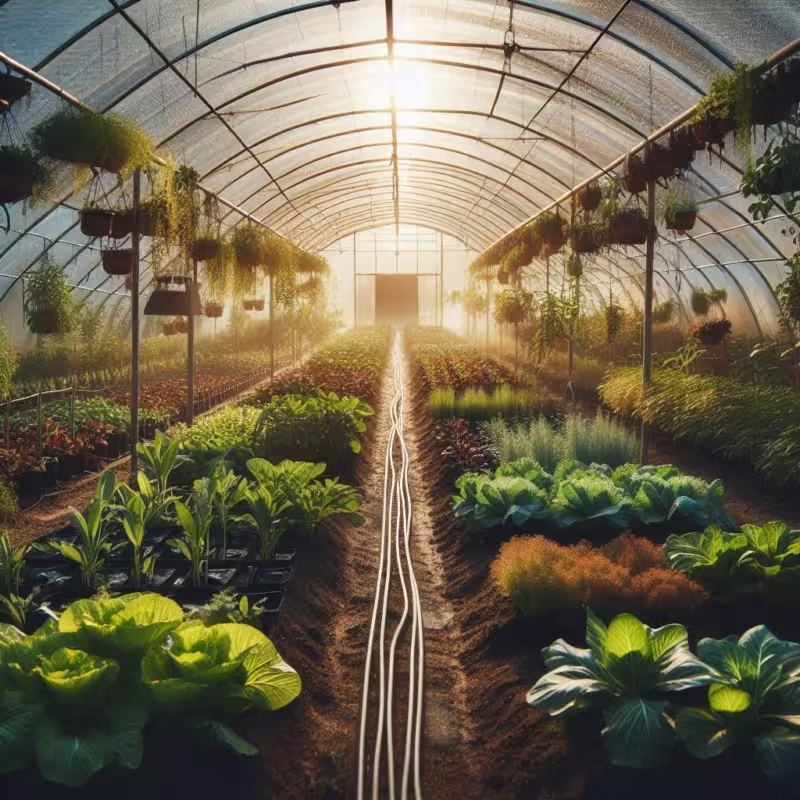
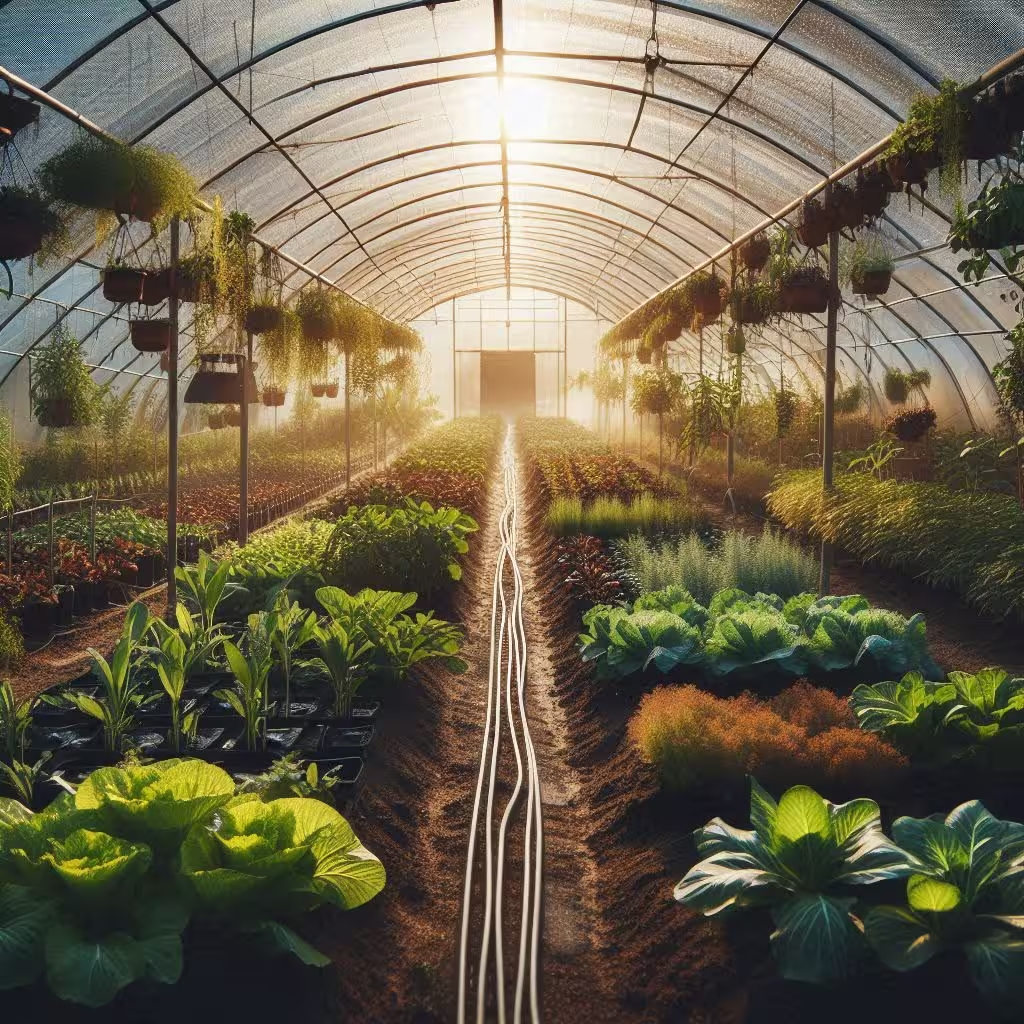
- Polytunnel
- Lavender cultivation
- Straw moisture measurement
- Tomato breeding
- Asparagus cultivation
- Viticulture
Further information on the Truebner's page
 Connection options
With the diverse connection options, almost all possible applications can be implemented:
- LoRaWan / NBIot sensors
- local weather station or internet weather service
- Soil moisture and temperature sensors
- Dynamic irrigation adjustment via rain delay, via temperature, humidity and precipitation or via evapotranspiration. In addition, the soil moisture can be switched on and the irrigation can be adjusted again
- Evaluation options via API, smartphone or CSV files
- With the Truebner RS485 adapter, up to 64 moisture sensors can be connected - with a maximum cable length of 1000m per strand.
- As standard, 8 irrigation circuits can be connected to the OpenSprinkler 3.3, with expansion boards up to 72 irrigation circuits. Up to two of these can be switched as master irrigation circuits (e.g. for well pumps).
- Event and data notifications can be sent via MQTT, IFTT or email
- With the master-slave cascading, several OpenSprinklers can be connected together and controlled centrally via the master-OpenSprinkler. This allows you to limit the cables for the solenoid valve control to nearby locations
Why saving water is so important in agriculture
Water is the elixir of life for plants, animals and people. In agriculture, it is crucial for growing food. But water is becoming increasingly scarce, primarily due to climate change and a growing global population.
Reasons for saving water in agriculture:
- Droughts and water shortages: Extreme weather events such as droughts are increasing and leading to water shortages.
- Growing population: As the population increases, the need for food also increases, which in turn requires more water.
- Environmental protection: Excessive water consumption can lead to deterioration of water quality and damage ecosystems.
- Cost Reduction: Efficient irrigation systems can reduce water costs for farmers.
Water saving measures:
- Drip irrigation: This method directs water specifically to the plant roots and reduces evaporation losses.
- Rainwater harvesting: Collecting and storing rainwater can be used for irrigation.
- Choosing water-saving plants: Not all plants have the same water needs.
- Accurate weather forecasts: With the help of modern technologies, farmers can adapt their irrigation to actual weather conditions.
- Soil care: Good soil structure improves water retention and reduces water requirements.
Conclusion
Saving water in agriculture is an important step towards securing our food supply and protecting our environment. By using modern technologies and proven cultivation methods, farmers can significantly reduce their water consumption while securing their yields.
The following products are used here:
- OpenSprinkler 3.3 DC (+Ethernet)
- Truebner RS485 adapter
- Truebner SMT100 RS485 Modbus
- Zone expanders
(Image AI generated and is for illustration purposes only)