Shop
Shop Configurator
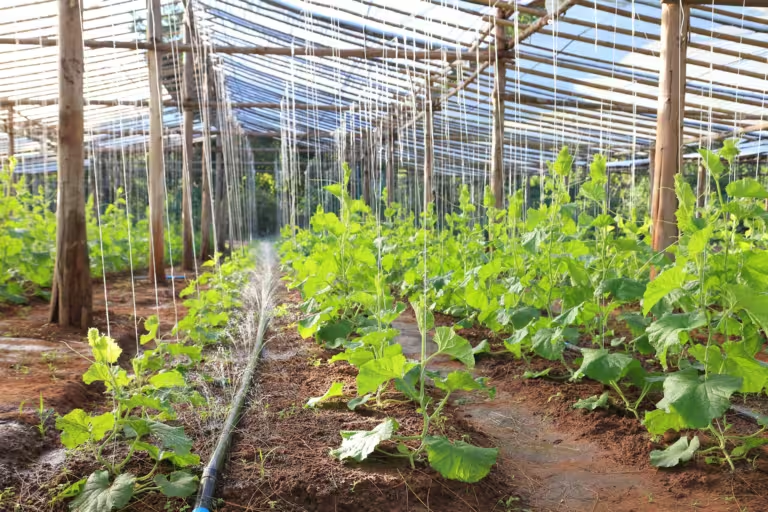

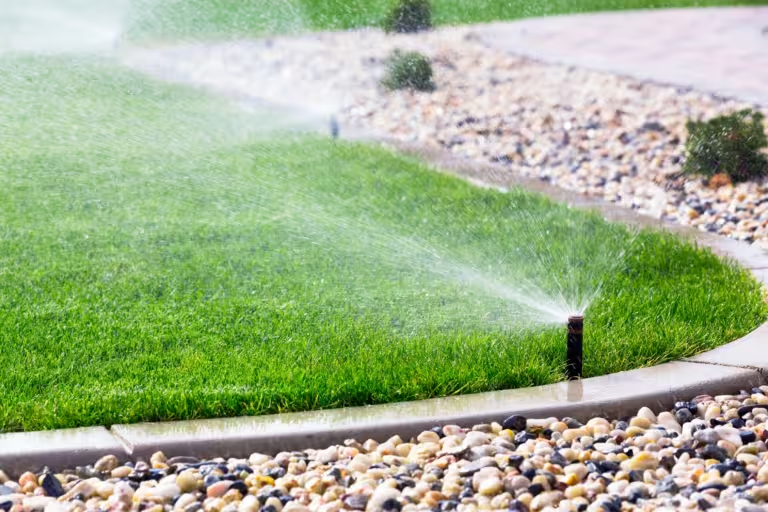
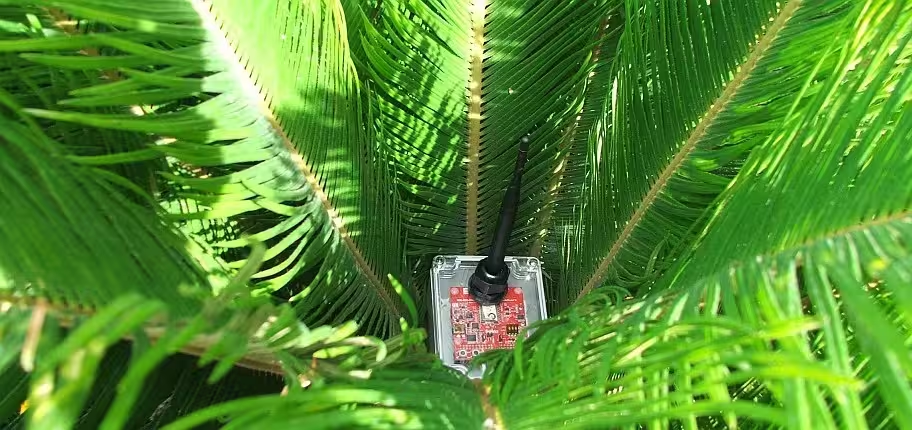
Automate your watering and access it from anywhere
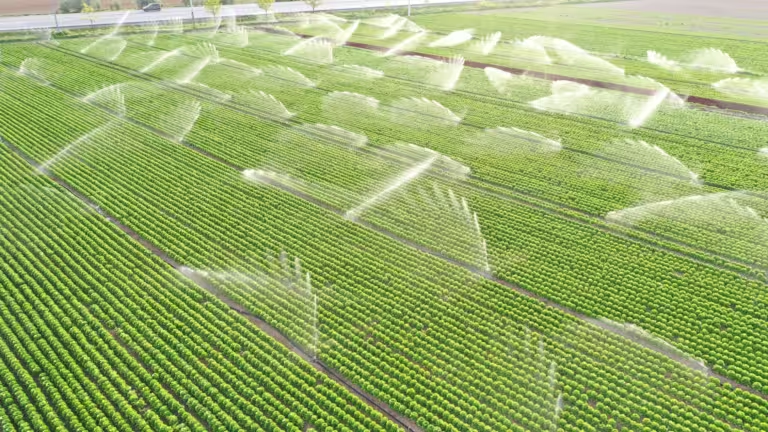
Keeping your lawn and flowers in beautiful condition doesn't have to be stressful. OpenSprinkler allows you to program, start or stop irrigation zones anytime, anywhere.
Whether you are sitting at your desktop, laptop, tablet or smartphone, whether you are at home, in the office or on the go, you can access your OpenSprinkler via any modern browser or use our free app for all common mobile operating systems.
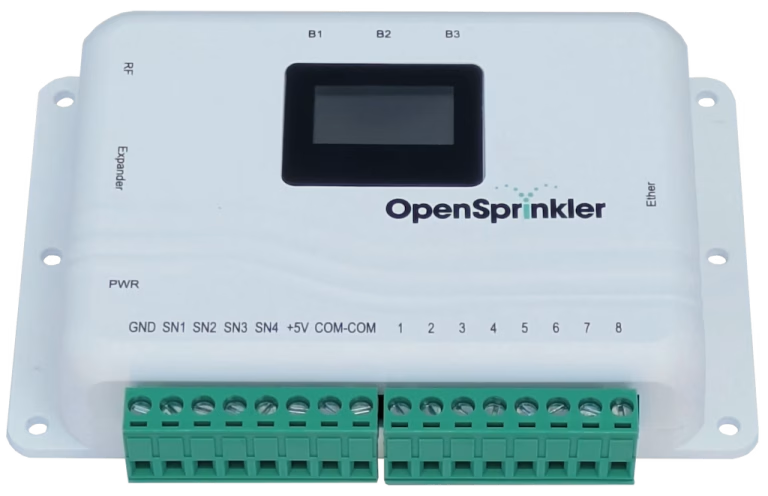
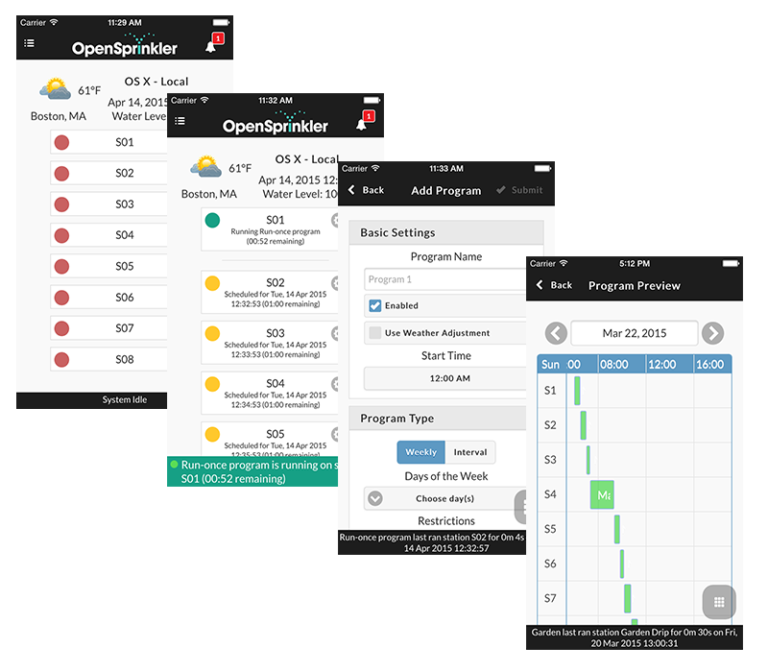
Program planning according to your ideas
How many individual programs do you need? One for all? How about a different program for each day or zone? With OpenSprinkler you can create a variety of independent programs with individual start times to suit your needs. Visualize the programs with the preview function and check the station processes with graphical representations of the log data.
Use a master zone or pump; run zones sequentially or in parallel; just expand the number of zones; give each zone and each program its own name - all of this is supported by OpenSprinkler. Connect a rain sensor or set the rain delay time manually. Go one step further and use our automatic, weather-controlled algorithms: your watering times are constantly adjusted based on local weather and precipitation conditions. No proprietary weather data - we use data that is publicly available worldwide.
APPs! APPs! APPs!
There are apps for Android, Apple and Windows for OpenSprinkler.
And if that's not enough, there's also the web interface that you can use to access it via any browser.

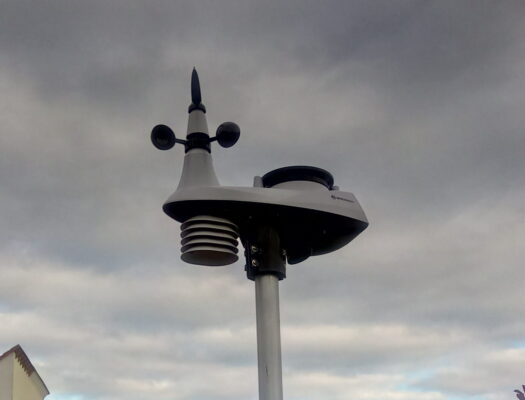
Integration of weather stations
Using the Weather Underground service (https://www.wunderground.com) you can connect your weather station to OpenSprinkler.
Simply enter the Wunderground API key in the OpenSprinkler settings and select your weather station. OpenSprinkler's weather service then automatically calculates irrigation adjustments using their own weather station.
Alternatively, you can run a weather service on a Linux-compatible system, e.g. a Raspberry Pi, and thus obtain weather data from other sources.
Dynamic, weather-dependent or sensor-dependent control
OpenSprinkler can retrieve the weather report via the Internet and adjust irrigation accordingly. To make the weather report more accurate, a rain sensor or a soil moisture sensor can also be connected.
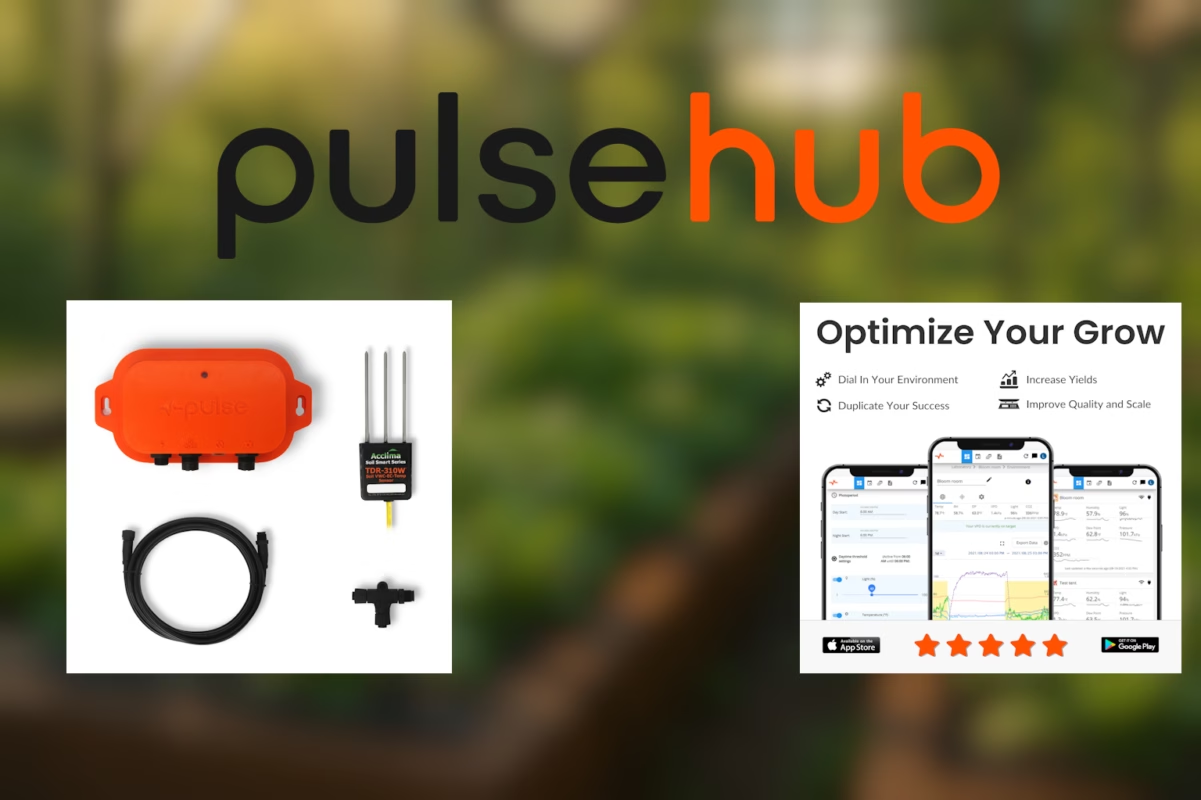
With the new one "Analog Sensor Board" You can connect up to 8 analog sensors - or any additional ones via the network.
And with that "Trueber RS485 adapter" even up to 64 SMT100 sensors!
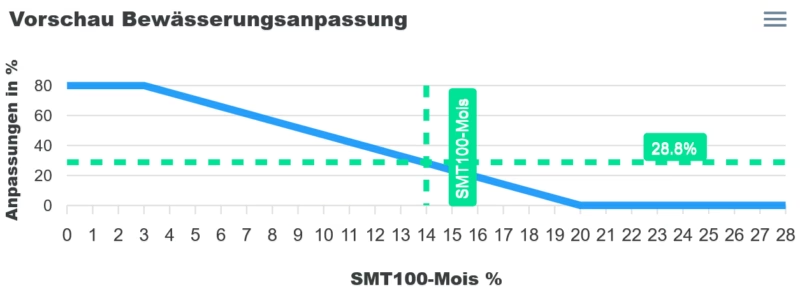
Soil moisture controls irrigation
The Program Adjustments feature allows you to use soil moisture as the basis for irrigation control. Simply define a minimum and maximum range for soil moisture and OpenSprinkler will automatically control irrigation.
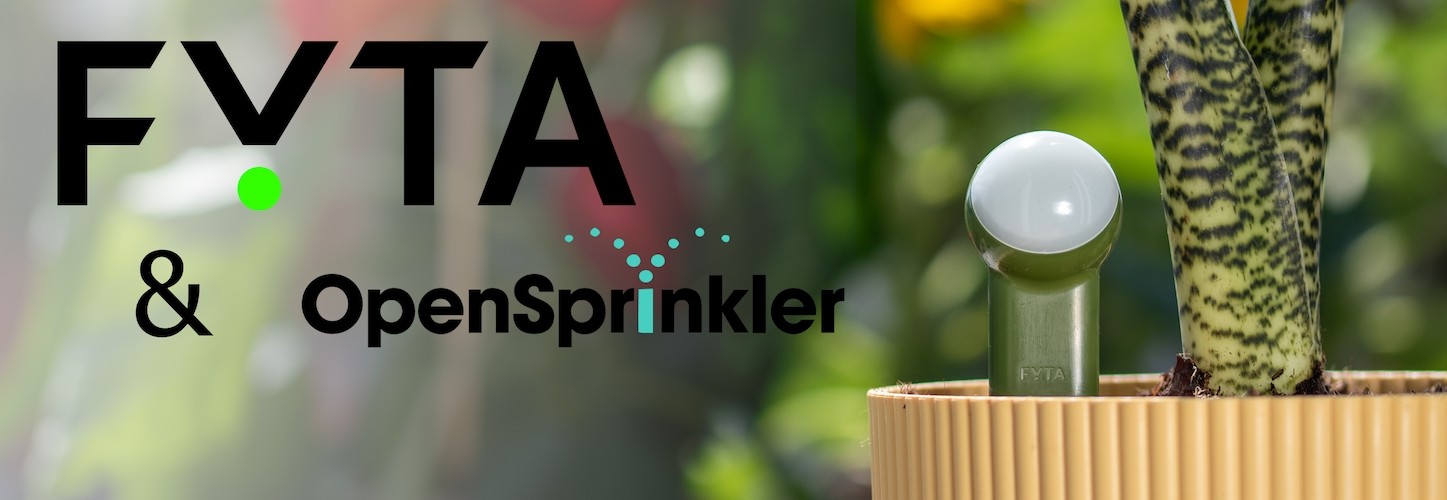
Available from September 2025: Interface to FYTA sensors!
Monitoring and control
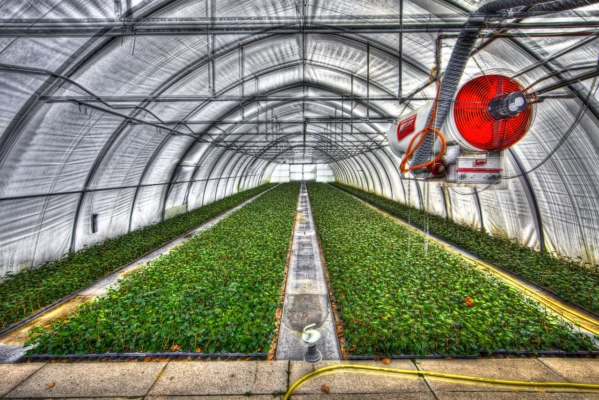
Define alarms for sensor value ranges. Control fans or automatically open windows, combine multiple conditions to perform targeted actions.
Monitor the entire cycle of your plants and control temperature and watering. The internal rain sensor can also be used for control - just like any other sensor that can be accessed via the API.
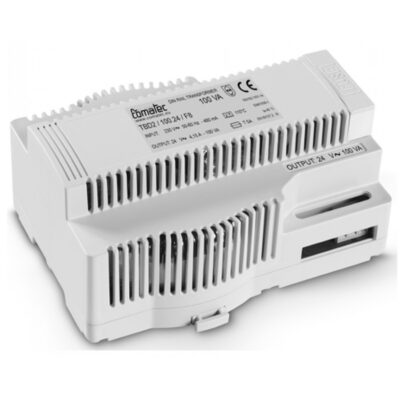
Power supplies from 1A to 4A
Depending on how many solenoid valves you want to operate at the same time, you can choose from different power supply strengths. These power supplies are suitable for mounting on a top-hat rail such as those found in control cabinets.
Our standard power supply (plug-in power supply) was specially developed for use on the OpenSprinker and supplies 24VAC 1.5A and can therefore operate up to 8 solenoid valves at the same time.
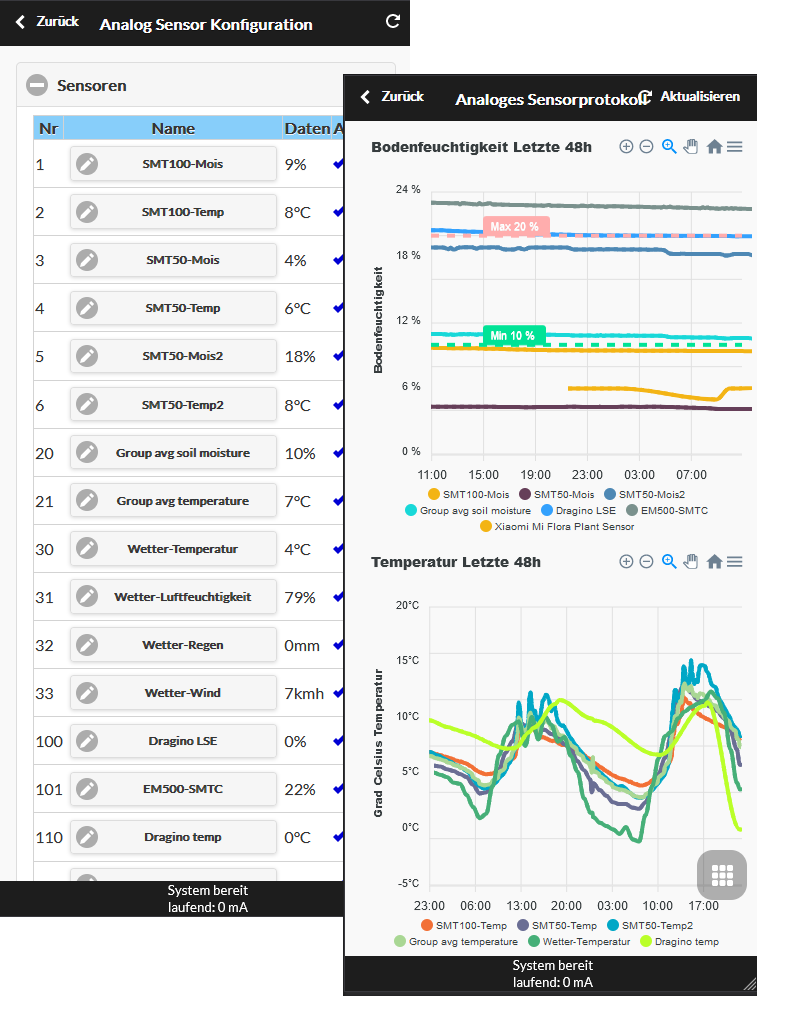
Measurement data recording with evaluation option
With the Analog Sensor Board you can connect and evaluate up to 8 analog sensors. It is also possible to record and save weather data.
Thanks to the export function, you can further process the values - and all of this is very easy in the app!
Since all measurement data is also published via MQTT, other applications can benefit from this.
Conversely, there is also the "virtual" sensor "MQTT Subscription", with which you can transfer measurement data from other applications - and thus also control irrigation!
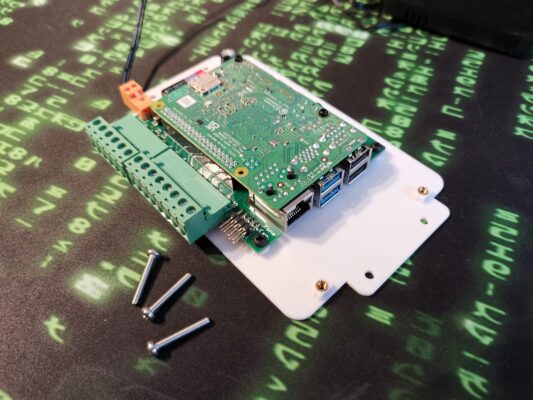
Also available as a kit for the Raspberry Pi
Thanks to the connection options of the Raspberry Pi, you can turn it into a full-fledged one Irrigation computer build yourself.
The optional housing has a base plate that allows you to optimally install your OpenSprinkler.
And new: From version 1.6, 8x analog sensor inputs including power supply for 3.3V and 5V are available. This means that several SMT50 can be connected and the irrigation can also be controlled via them.
But also digital SMT100 sensors are supported if they are connected via an RS485 USB adapter, for example.
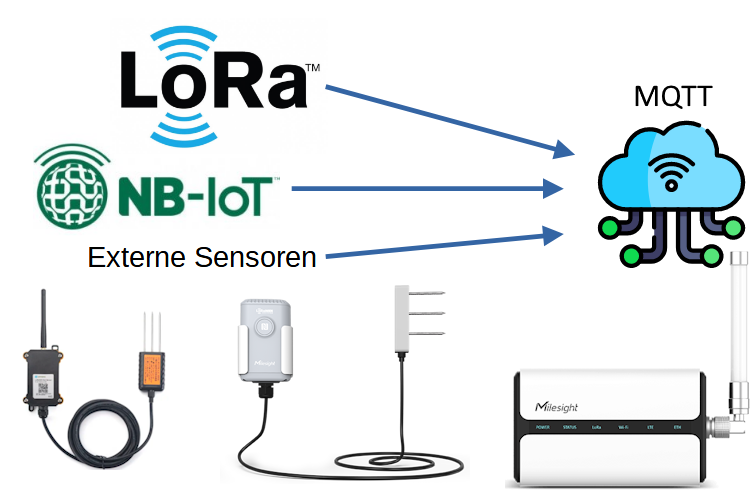
Connect LoRaWAN and NB-Iot sensors via MQTT
With the new firmware 2.3.1(150), MQTT brokers can be subscribed to read remote sensor data. This data can be used to control irrigation.
The collected sensor data is saved and graphically processed. Of course, these can also be downloaded as CSV or JSON data.
WiFi, Ethernet or autonomous
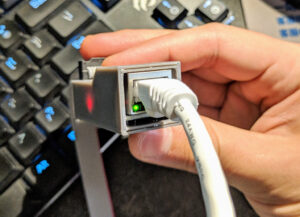
OpenSprinkler can be integrated into your network with the optional Ethernet interface. The standard WLAN interface can be operated in client or access point mode. In access point mode, OpenSprinkler creates its own WiFi that you can connect to with your smartphone. In client mode you can connect the OpenSprinkler to your WiFi.
Additional supplement products
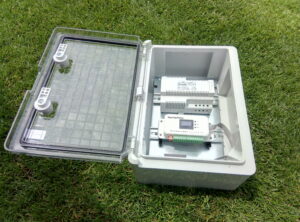
For professional use, we offer products for permanent installation such as housings and top-hat rail transformers.
Thanks to 3D printing processes, we produce the necessary top-hat rail brackets ourselves. In addition to standard brackets, we also offer the Double and triple deckers with which you can attach up to two ZoneExpanders on top of each other.
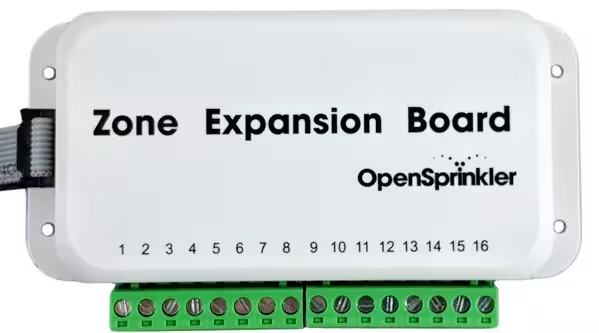
Scalable up to 72 irrigation zones
OpenSprinkler supports 8 zones by default. With a zone expander, 16 additional zones can be served. Up to 4 zone expanders can be connected.